Meiji Jingū and Takeshita Street in a few lines
| In 2026 | |
|---|---|
| Meiji Jingū | Free, open every day from sunrise to sunset: the hours change every month |
| Paid extras | The Inner Garden and the Meiji Jingu Museum have their own tickets and hours |
| Getting there | JR Harajuku station (Yamanote line) or Meiji-jingumae metro station, a minute from the entrance |
| Takeshita Street | Across the road from Harajuku station, a few minutes on foot from the shrine entrance |
Checked in November 2026. The monthly opening and closing times are on the shrine's official site.
Lunch in Shinjuku, then the shrine
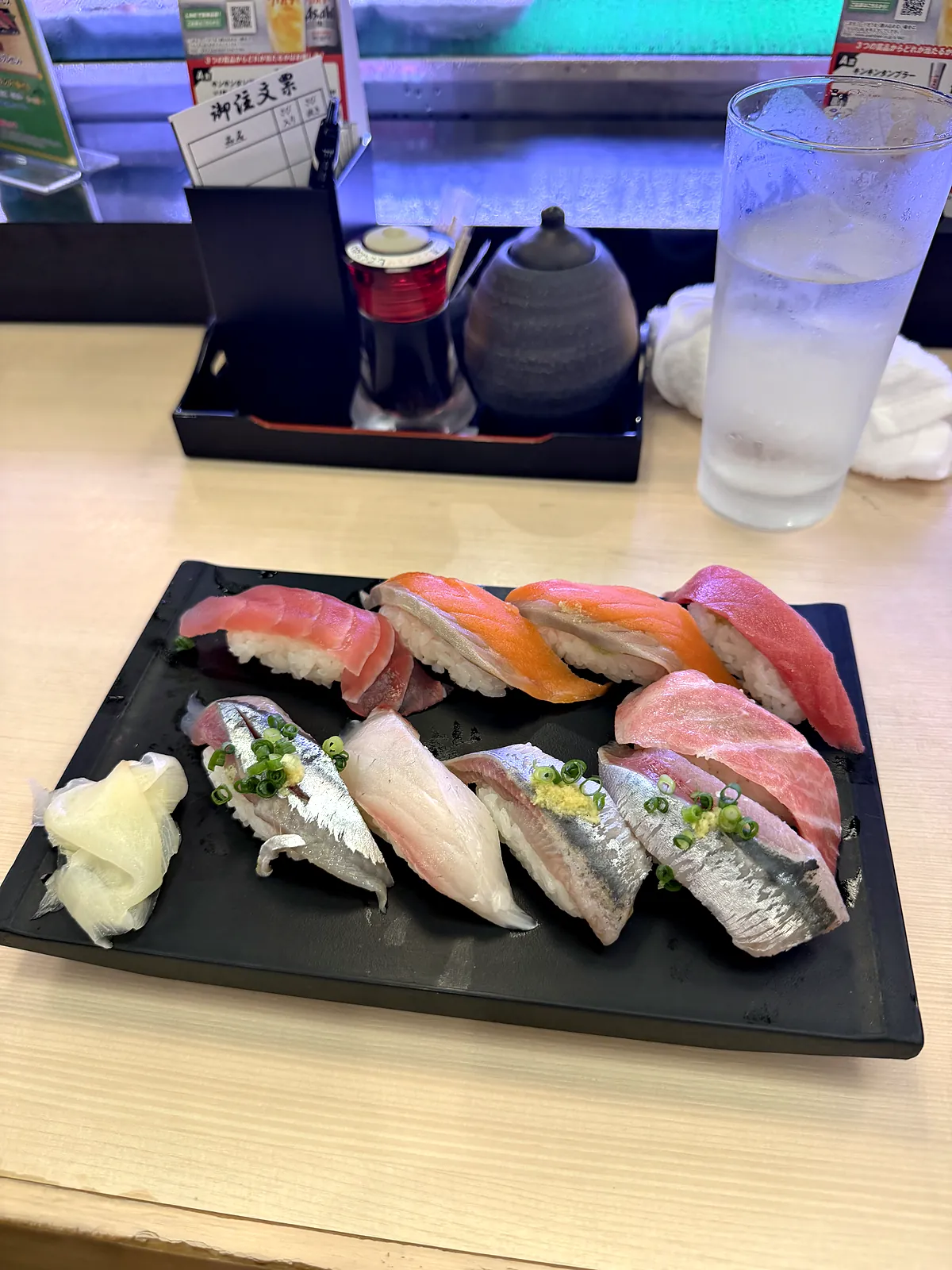
We had lunch at Sushizanmai, by the east exit of Shinjuku station: nigiri of tuna, salmon, sardine and fatty tuna. Harajuku is two stops away on the Yamanote line.
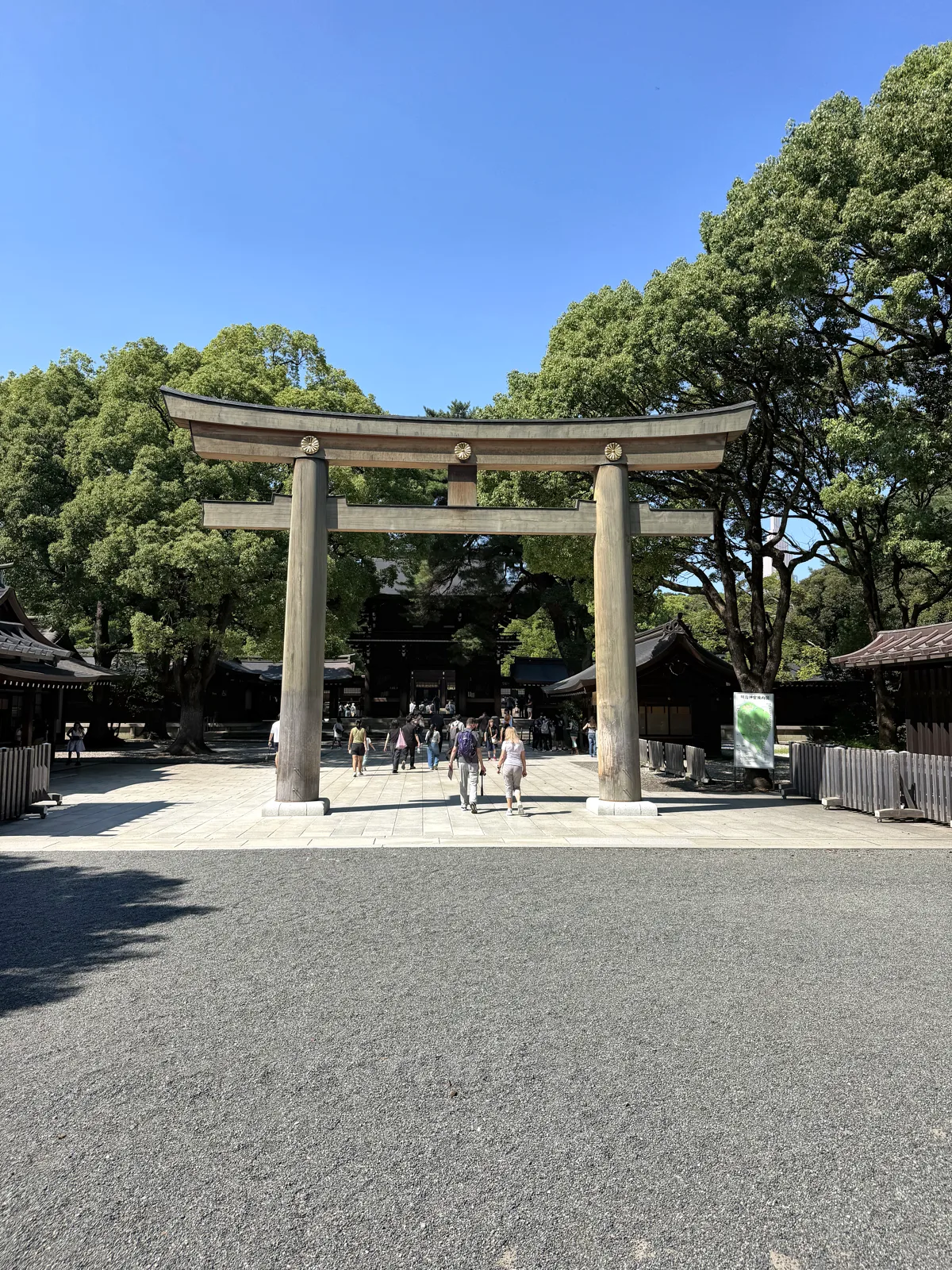
The entrance to Meiji Jingū is right next to Harajuku station. A first giant wooden torii marks the start of a wide gravel path through the forest.
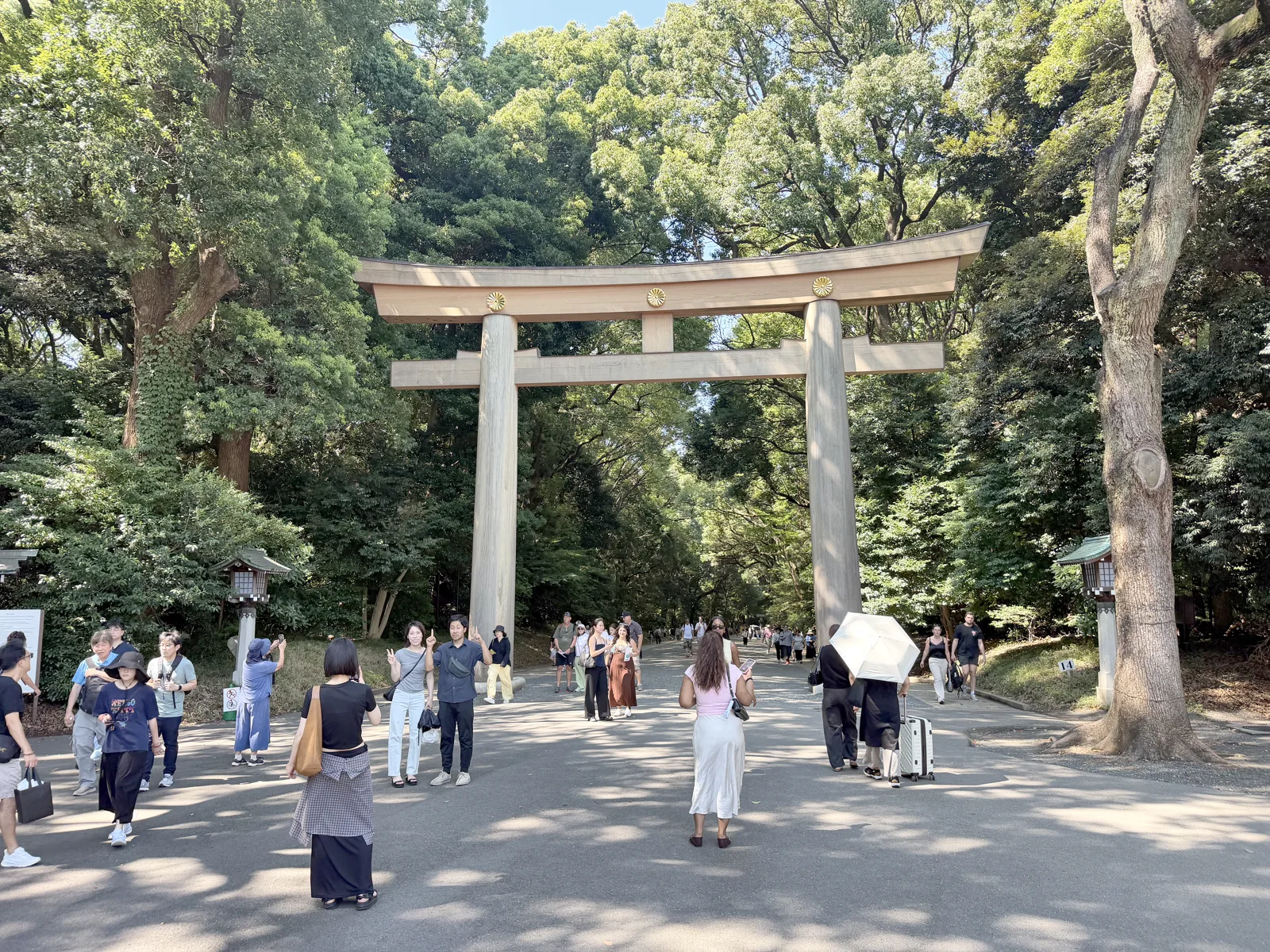
The path through the forest
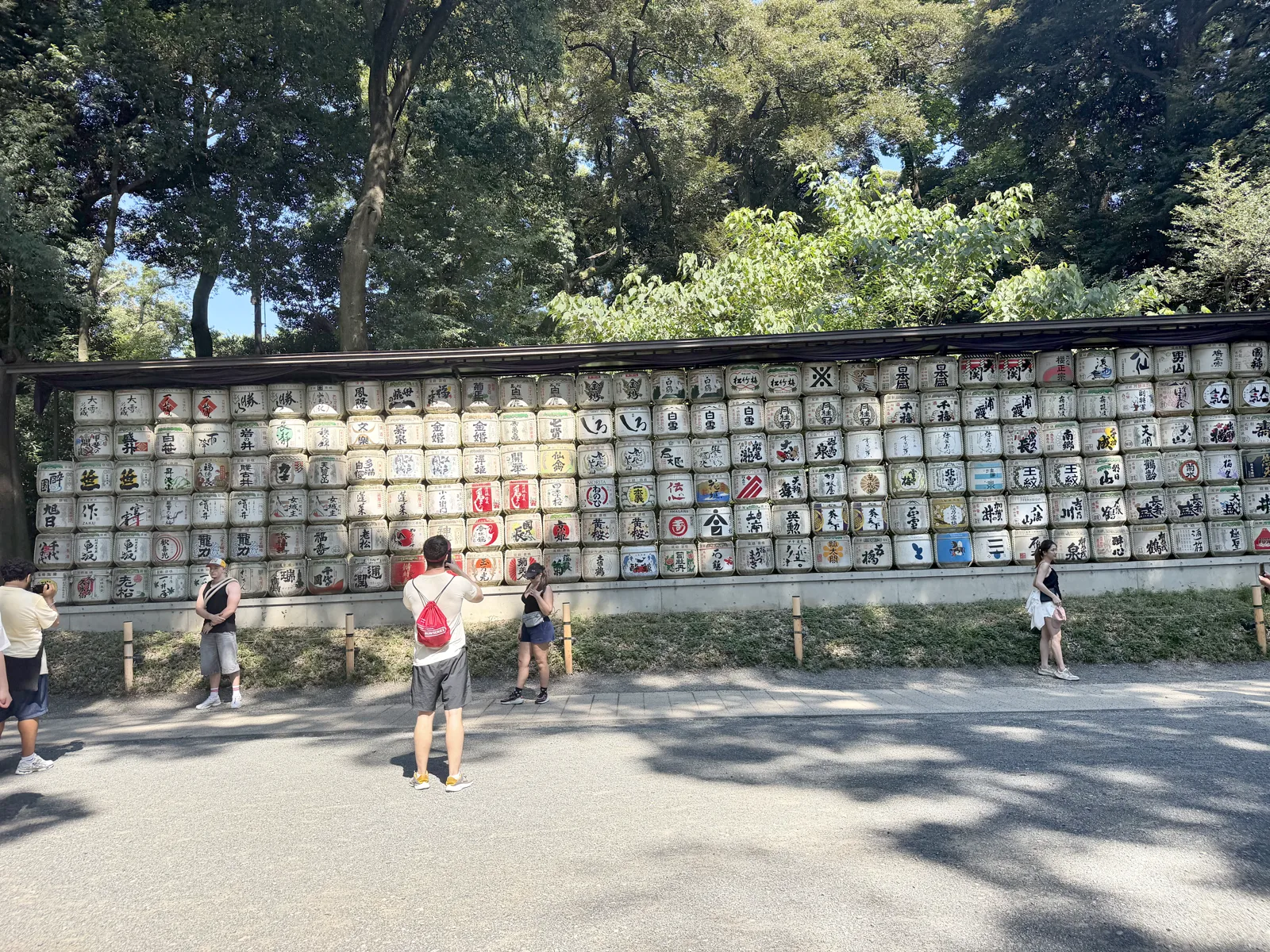
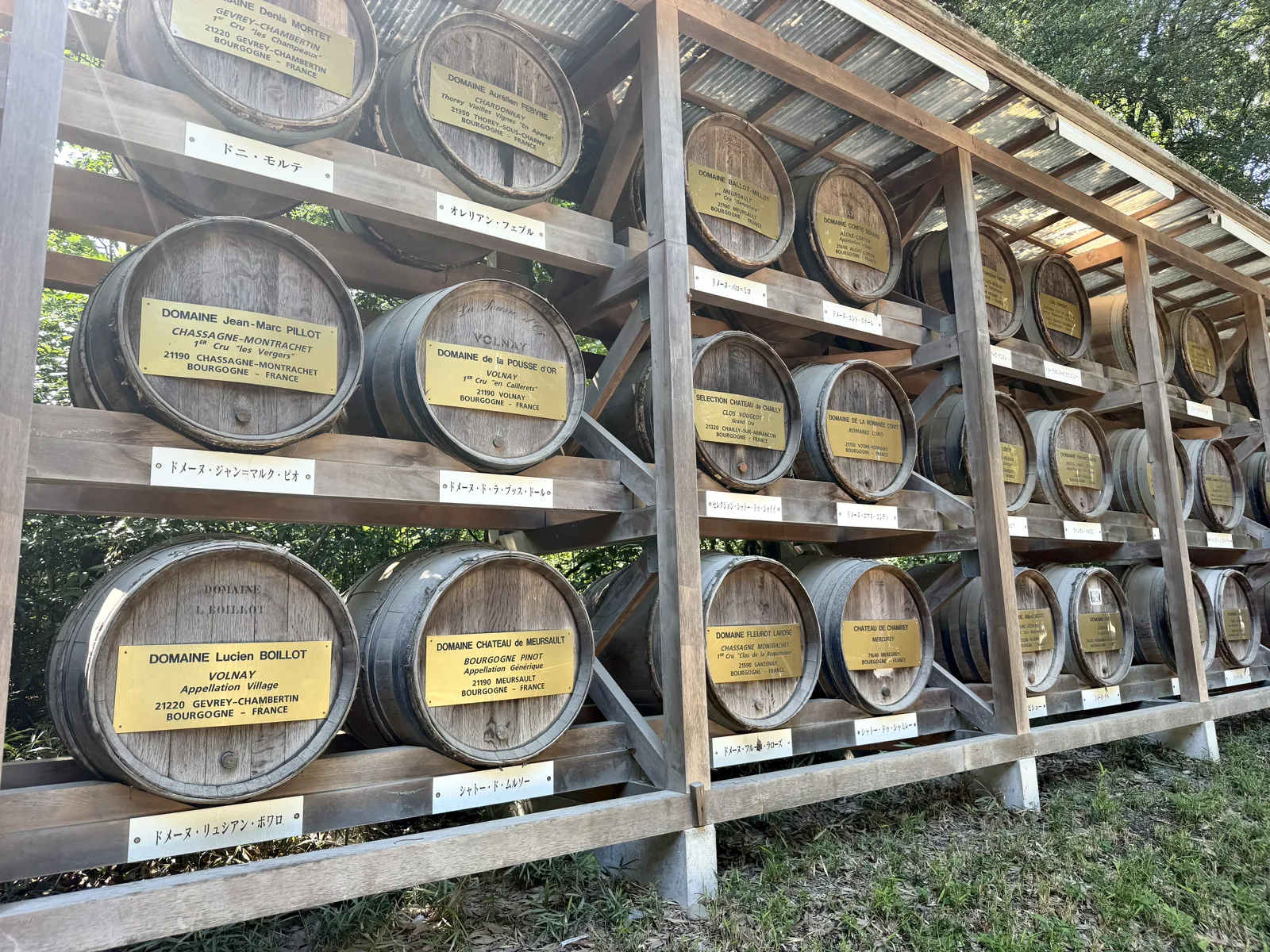
The path is long and wide, between tall trees that give some shade: welcome in August. Along the way, two walls face each other: barrels of sake offered by Japanese brewers on one side, and barrels of French wine on the other.
The main gate and the courtyard
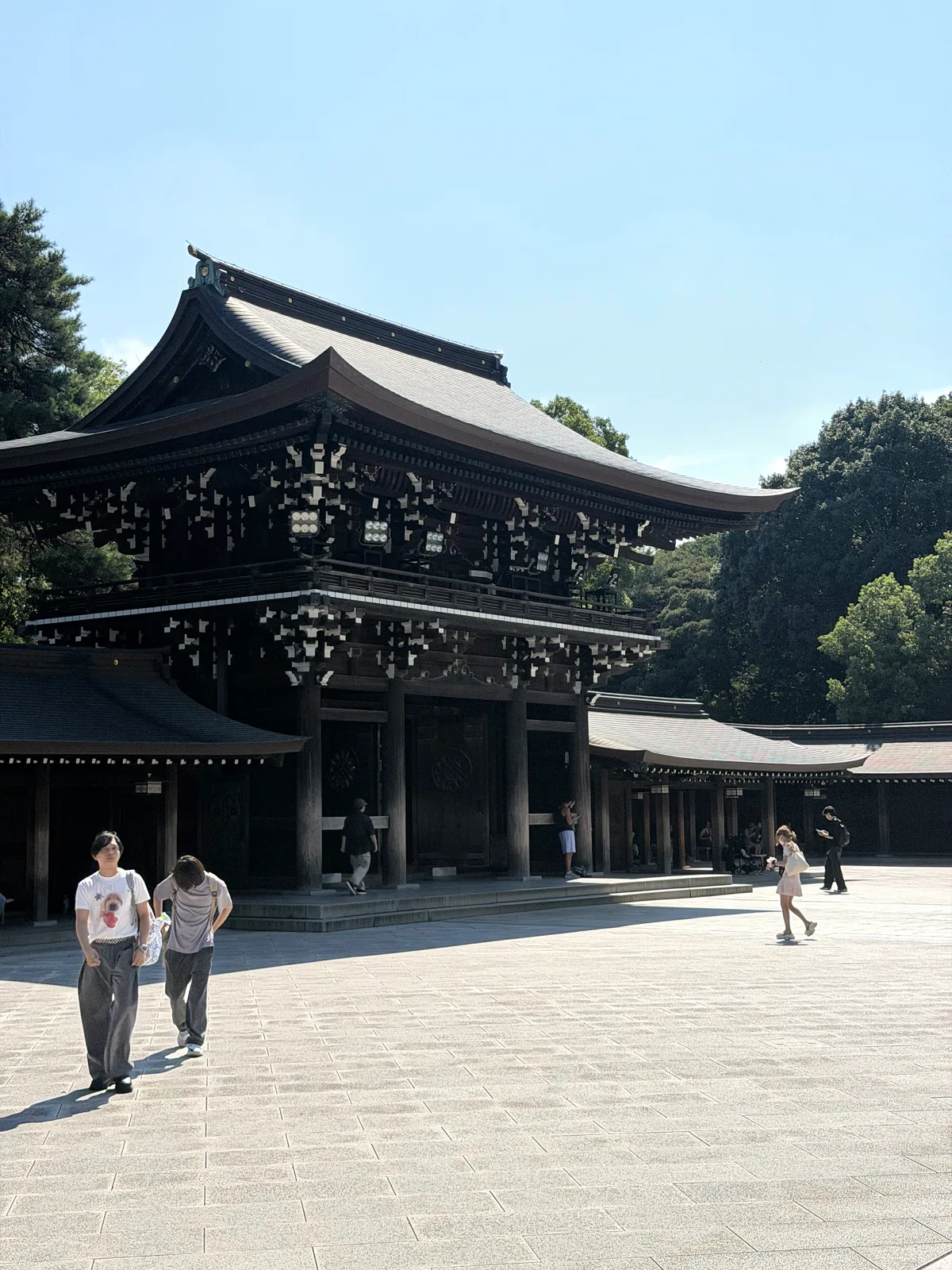
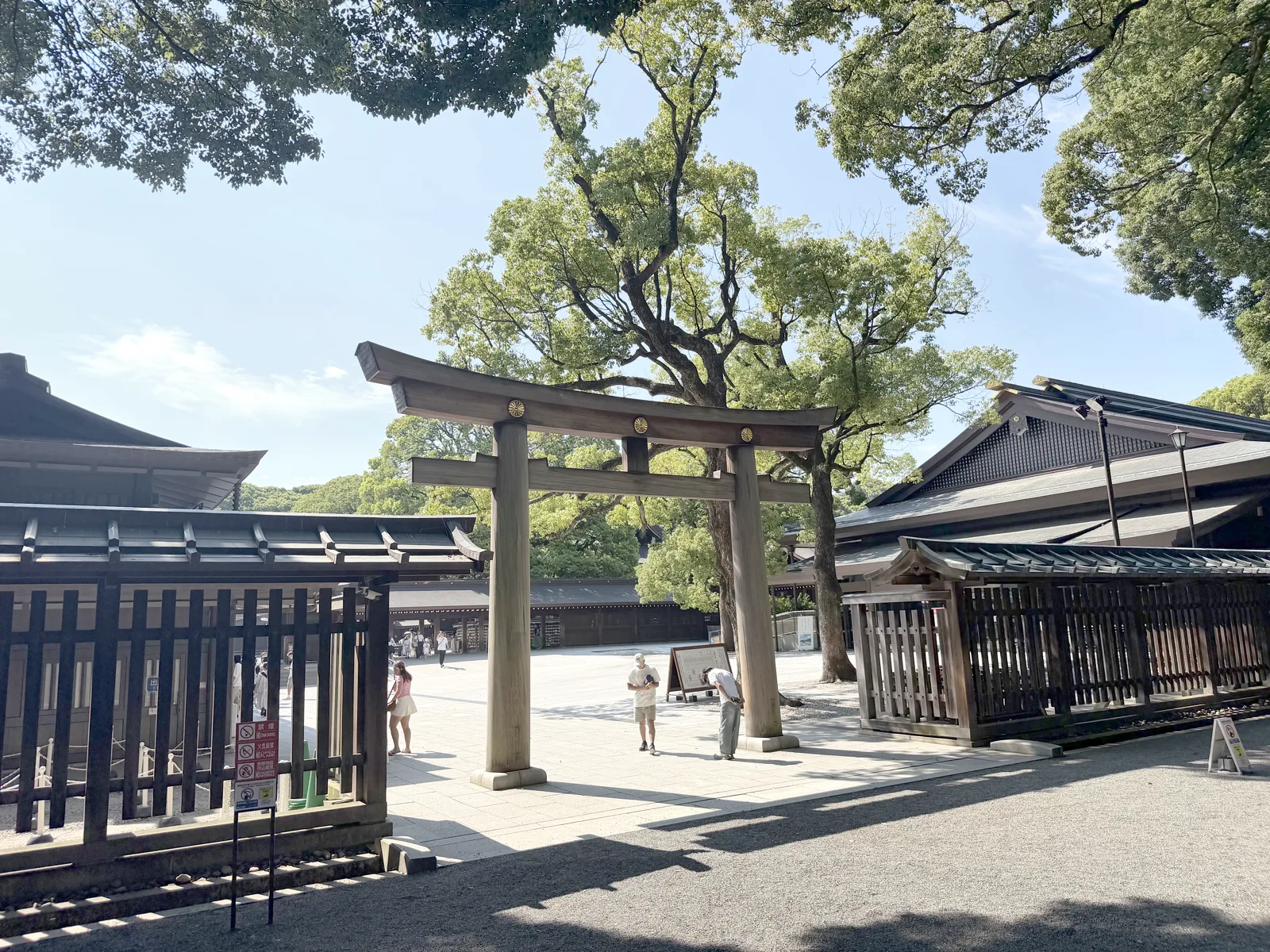
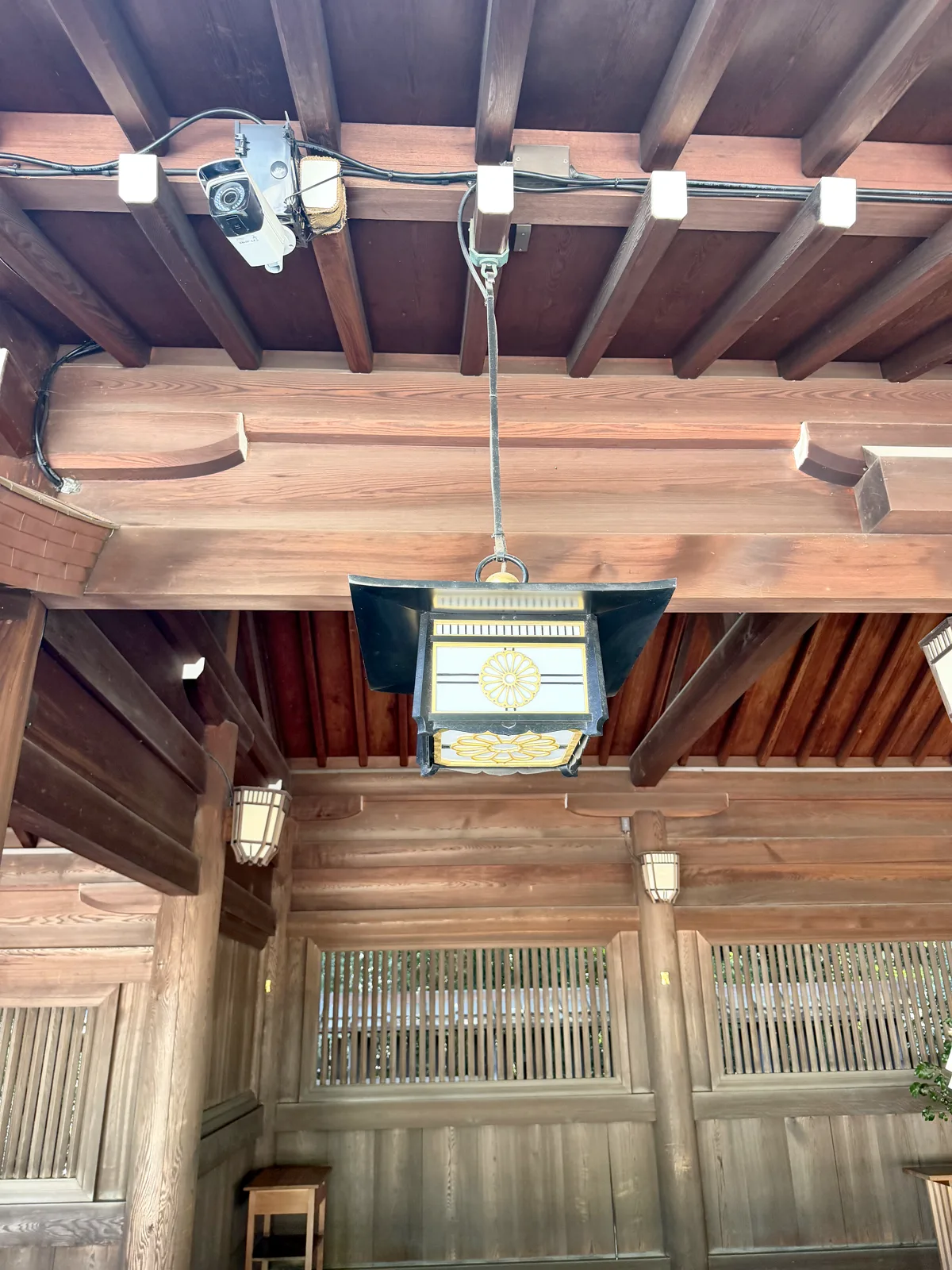
At the end of the path, a dark wooden gate opens onto the courtyard of the main shrine, shaded by great trees. Hanging lanterns line the eaves.
The shrine is free. Paid extras, such as the Inner Garden and the museum, have their own hours.
Takeshita Street, across the road
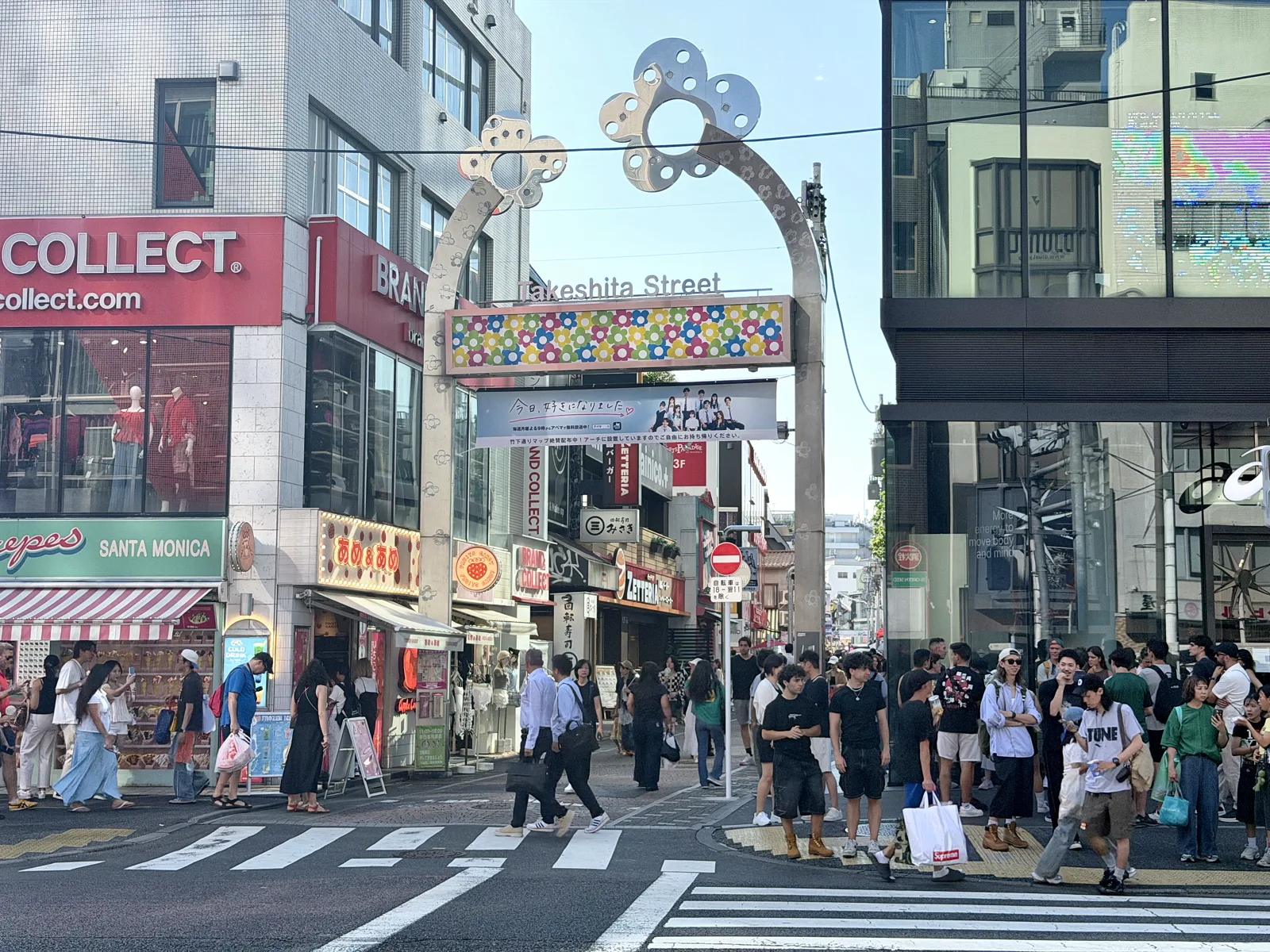
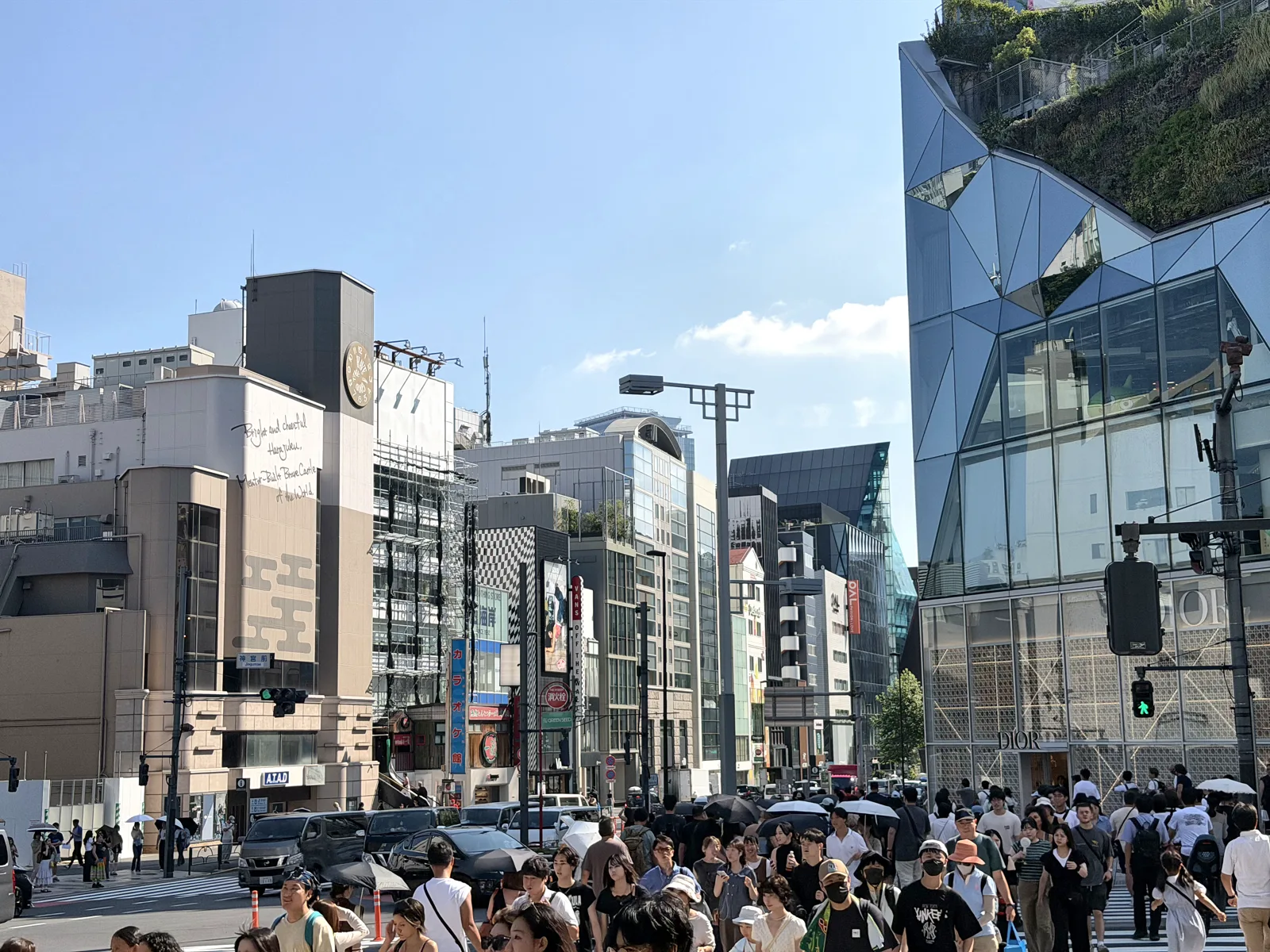
Back at Harajuku station, we crossed to Takeshita Street, with its arch at the entrance. The contrast is total: after the forest, a narrow lane packed with people, fashion shops and sweet stalls.
We were back at the hotel around 5pm, because of the August heat. In August, keep the outdoor visits for the morning and plan a break in the afternoon.
Where to stay for Harajuku
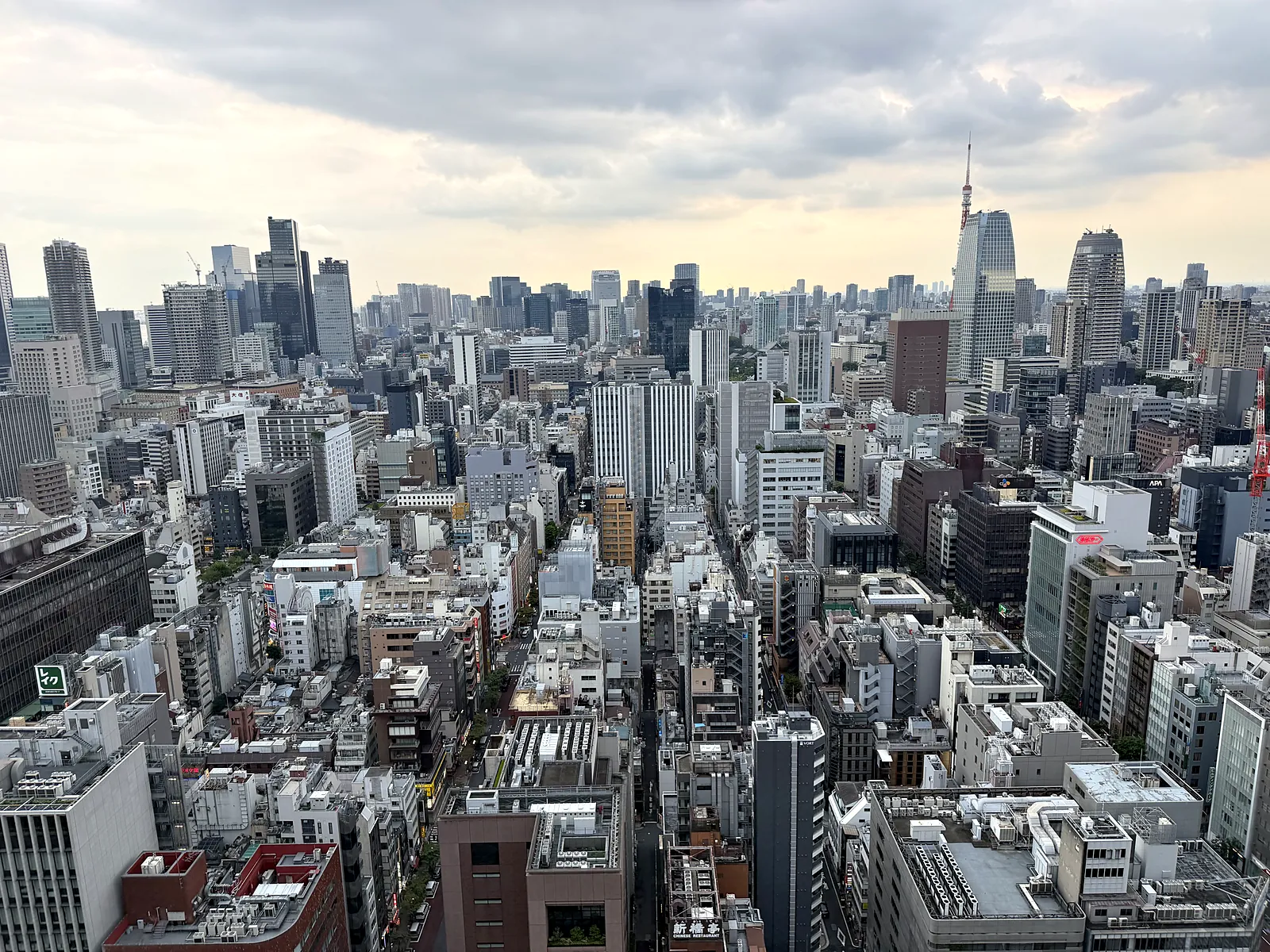
We stayed in Shinbashi, next to Ginza. For Meiji Jingū and Harajuku, Shibuya and Shinjuku are closer: all three are on the Yamanote line.
- Shibuya for Harajuku and Meiji Jingū on foot, and the famous crossing.
- Shinjuku for the most choice of hotels, two stops from Harajuku.
- Our guide to where to stay in Tokyo compares seven areas, with a map and hotels for each budget.
The same day, in the morning: our article on Sensō-ji and Asakusa at 9am.
Also on Tokyo
Frequently asked questions
Is Meiji Jingū free?
Yes. The shrine and its forest are free; the Inner Garden and the museum have their own tickets.
What are Meiji Jingū's opening hours?
It opens at sunrise and closes at sunset, so the times change every month. Check the shrine's official table before you go.
How far is Takeshita Street from Meiji Jingū?
A few minutes on foot: the shrine entrance and Takeshita Street are on either side of Harajuku station.
Why are there wine barrels at Meiji Jingū?
Barrels of French wine face the wall of sake barrels on the path to the shrine, both offered to it.
Where to stay near Meiji Jingū?
In Shibuya, within walking distance via Harajuku, or in Shinjuku, two stops away on the Yamanote line.
Written by Cedric
Cedric stayed in Tokyo from 23 to 26 August 2026. Last reviewed: November 2026.
The photos on this page were taken by our team on 24 August 2026.